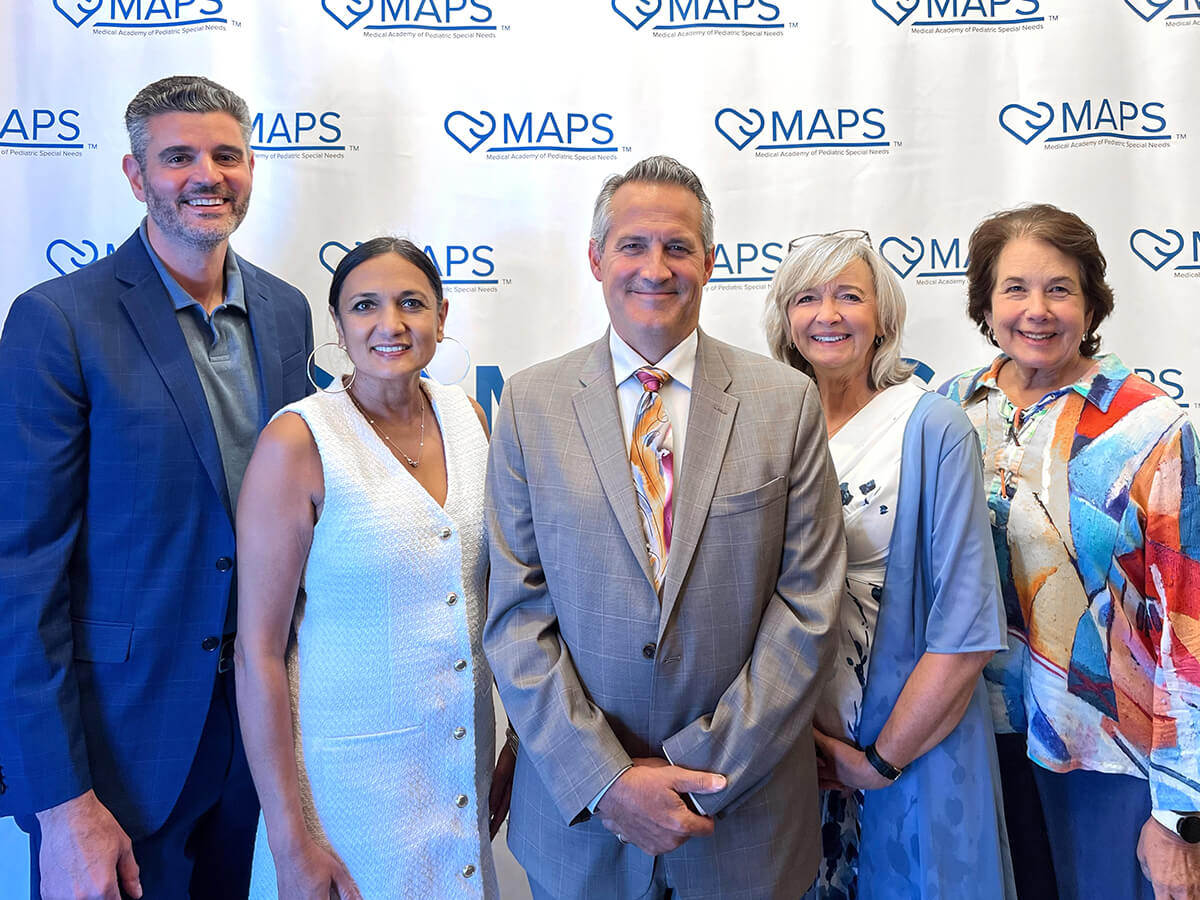
What Is a MAPS Doctor? A Parent's Guide to Biomedical Autism Care
What the credential means, what these clinicians actually do, and how to tell a good one from the hype
If you've spent any time in autism parent groups, you've probably seen the term "MAPS doctor" thrown around, usually by a parent saying theirs changed everything, or another warning you to steer clear. It's one of those phrases everyone seems to know except you, and nobody quite explains. So let's clear it up plainly: what a MAPS doctor is, what they do, what the credential actually means, and how to think about this kind of care without falling for either the hype or the dismissal.
What Does "MAPS" Stand For?

MAPS stands for the Medical Academy of Pediatric Special Needs. It's an organization that provides advanced training, through continuing medical education (CME) and a fellowship program, for licensed medical professionals who want to specialize in the complex medical needs of children with autism and other neurodevelopmental conditions.
Here's the most important thing to understand up front: "MAPS doctor" is not a separate kind of doctor or a replacement for a medical degree. A MAPS practitioner is already a licensed clinician, usually a medical doctor (MD or DO), but sometimes a nurse practitioner, naturopathic doctor, or other credentialed professional, who has pursued additional, structured training on top of their existing qualifications. A physician who completes the fellowship can earn the designation FMAPS (Fellow of MAPS).
1 What Makes the Approach Different?
Standard pediatric care for autism focuses largely on behavioral and developmental support: speech therapy, occupational therapy, ABA, and managing specific symptoms. These are essential, and a good MAPS doctor doesn't replace them.
What MAPS training adds is a medical, root-cause lens. Instead of treating autism purely as a behavioral diagnosis, the MAPS approach looks at the whole body and asks whether underlying medical issues, things like gut problems, nutrient deficiencies, inflammation, or metabolic dysfunction, are contributing to a child's symptoms and quality of life. The MAPS curriculum is built around several core "foundations of health" that its practitioners are trained to investigate and support:
Gastroenterology & nutrition
Gut health, the microbiome, food sensitivities, and nutritional status.
Metabolism
Mitochondrial and cellular energy function.
Immunology
Immune dysregulation and inflammation.
Neurology
The nervous system and how the other systems affect it.
Environmental medicine
Toxic exposures and the body's detox capacity.
Clinical practice
Pulling it together into individualized, testing-guided care.
If those categories sound familiar, it's because they map directly onto the topics we write about here, from mitochondrial function and gut dysbiosis to sleep and methylation. That's the MAPS framework in action: each is one piece of a connected, whole-body picture.
2 What Does a MAPS Doctor Actually Do?

In practice, a visit with a MAPS practitioner tends to look different from a typical short pediatric appointment. You can usually expect:
- A long, detailed history. Pregnancy and birth, early development, diet, GI symptoms, sleep, infections, antibiotic use, regressions, and family history, often an hour or more.
- Comprehensive functional testing. Rather than guessing, a MAPS doctor typically orders labs to look under the hood, things like stool analysis, an Organic Acids Test (OAT), nutrient and metabolic panels, and folate-receptor antibody testing, depending on the child.
- An individualized plan. Based on what the testing shows, not a one-size-fits-all protocol. That might include dietary changes, targeted supplements, gut support, or addressing a specific finding, always meant to work alongside the child's developmental therapies.
- Ongoing adjustment. Re-testing and refining over time rather than a single fix.
The through-line is "test, don't guess." A good MAPS doctor investigates before intervening, which is exactly how this kind of care should work.
3 An Honest Word on the Evidence
This is where parents deserve straight talk, because the field attracts both overpromising and blanket dismissal, and neither serves you.
Some of what the biomedical approach addresses is well-supported: GI problems really are more common in autistic children, mitochondrial dysfunction is documented in a meaningful subset, and nutrient deficiencies are real and measurable. Addressing a diagnosed medical problem that happens to occur in an autistic child is simply good medicine. Other interventions are more preliminary or experimental, promising in early research but not yet proven, and some popular treatments have little quality evidence behind them at all.
4 Is a MAPS Doctor Right for Your Family?

This approach tends to be most worth considering when:
- Your child has ongoing medical symptoms, chronic GI issues, poor sleep, frequent infections, feeding problems, that standard care hasn't resolved.
- You suspect there's a physical, "something's bothering my child" component driving behavior or discomfort.
- You want a whole-body workup to complement, not replace, the therapies your child is already getting.
- You're comfortable with an approach that uses functional testing and individualized plans, and you'll stay engaged with your regular pediatrician too.
It's less likely to be the right fit if you're looking for a quick fix, or if you'd be stretching financially for unproven treatments, since much of this care is out-of-pocket.
How to Get Started
- Keep your regular care in place. A MAPS doctor works best alongside your pediatrician and your child's developmental therapies, not instead of them.
- Look for a test-first practitioner. The best sign is a clinician who wants to investigate with appropriate labs before recommending treatments.
- Ask about evidence and cost up front. A good practitioner will happily explain what they're testing, why, what the evidence is, and what it will cost.
- Start with the symptoms that affect daily life most. Sleep, GI issues, and feeding are often the highest-impact places to begin.
Frequently Asked Questions
Is a MAPS doctor a real doctor?
Yes. A MAPS practitioner is an already-licensed clinician (usually an MD or DO, sometimes an NP, ND, or other credentialed professional) who has completed additional training through the Medical Academy of Pediatric Special Needs. MAPS is advanced training layered on top of an existing medical license, not a replacement for one.
What does a MAPS doctor do for autism?
They take a medical, root-cause approach, investigating whether underlying issues like gut problems, nutrient deficiencies, inflammation, or metabolic dysfunction are contributing to a child's symptoms, using comprehensive testing, then building an individualized plan to work alongside developmental therapies.
Can a MAPS doctor cure autism?
No, and you should be wary of anyone who claims they can. The goal of good biomedical care is to identify and treat underlying medical problems that affect a child's health and comfort, which can meaningfully improve quality of life, not to "cure" autism.
Does insurance cover a MAPS doctor?
Often not, or only partially. Much biomedical and functional care is out-of-pocket, including many of the specialized labs. It's worth asking about costs clearly before you begin.
Curious whether a root-cause approach could help your child?
Neuro Root brings biomedical, MAPS-style care to families through telehealth consultations and functional lab testing, so you can investigate the medical pieces of your child's picture and build a safe, individualized, test-first plan, alongside your existing care team.
Learn how Neuro Root can helpDisclosure: Neuro Root offers paid telehealth services and laboratory testing, and may earn compensation from tests, products, or services mentioned on our platform. This article is educational and is not a substitute for professional medical advice. MAPS and FMAPS are designations of the Medical Academy of Pediatric Special Needs; Neuro Root is independent of that organization.