
The Silent Shift: The Neurobiology and Mechanics of Autistic Regression in Toddlers
For many parents, a child's early months are a joyful rhythm of "firsts"—the first social smile, the first wave "bye-bye," the first clear "Mama." Then, for a meaningful share of families whose children are later diagnosed with autism, the trajectory shifts. A toddler who was babbling, pointing, and responding to their name begins to lose those hard-won skills.
For decades, this left parents heartbroken and scientists puzzled. But thanks to advances in neuroimaging, genetics, and neuroimmunology, researchers now understand autistic regression not as a sudden environmental "event" but as a complex biological transition—an intersection of genetic vulnerability, synaptic remodeling, metabolic stress, and rapid brain growth.
What Does Autistic Regression Look Like?

Regression affects a substantial minority of autistic children—commonly estimated at roughly 20–30% of cases—with skill loss clustering between 15 and 24 months and a clinical peak around 18–20 months.1 It isn't a uniform decline across every domain; it predominantly targets social communication and relational engagement. The skill loss usually shows up in three areas:
- Language: a child with 5–20 functional words may stop using them entirely over weeks or months, and stop imitating sounds.
- Social connection: eye contact fades, response to their name diminishes, and back-and-forth games like peek-a-boo drop away.
- Non-verbal gestures: pointing to share, waving goodbye, and reaching to be held often disappear.
While the change can feel abrupt, retrospective home-video studies show regression is often a gradual decline spanning weeks or months rather than an overnight loss.2
1 Why 18 to 24 Months? The Critical Brain Window

To understand why regression clusters so tightly here, look at the transformation happening inside the toddler brain. In the second year of life, the brain isn't just growing—it's rewiring its communication architecture, and that creates a vulnerability window.
The onset of synaptic pruning
In infancy the brain overproduces neural connections (synaptogenesis). By toddlerhood it must streamline that network through synaptic pruning—eliminating weak or unused connections while strengthening important ones. Research suggests that in children who experience regression, this pruning may become dysregulated, trimming excessively or unevenly and destabilizing the circuits responsible for real-time social processing and language.3 The late neuroscientist Annette Karmiloff-Smith consolidated this into an "over-pruning" hypothesis: too much growth, followed by too much cutting back.4
Early postnatal brain overgrowth
Structural MRI research has shown that many autistic children go through a phase of accelerated brain growth in late infancy and early toddlerhood.4 That sudden expansion can create a mismatch: regions grow faster than the long-range fibers connecting them. Local (short-distance) networks become over-connected while long-range networks (front-to-back) stay under-connected. Around 18 months—right when development demands a surge of integrative processing (eyes, ears, memory, and social reasoning at once)—an under-connected long-range system can hit a bottleneck, and previously functional skills break down under the load.
2 The Biological Mechanics of Regression
Modern research treats regression as multifactorial: a genetic baseline meeting specific biological stressors. The cascade runs roughly like this—genetic predisposition, layered with neurobiological vulnerability, tipped by systemic triggers:
Neuroinflammation and microglial activation
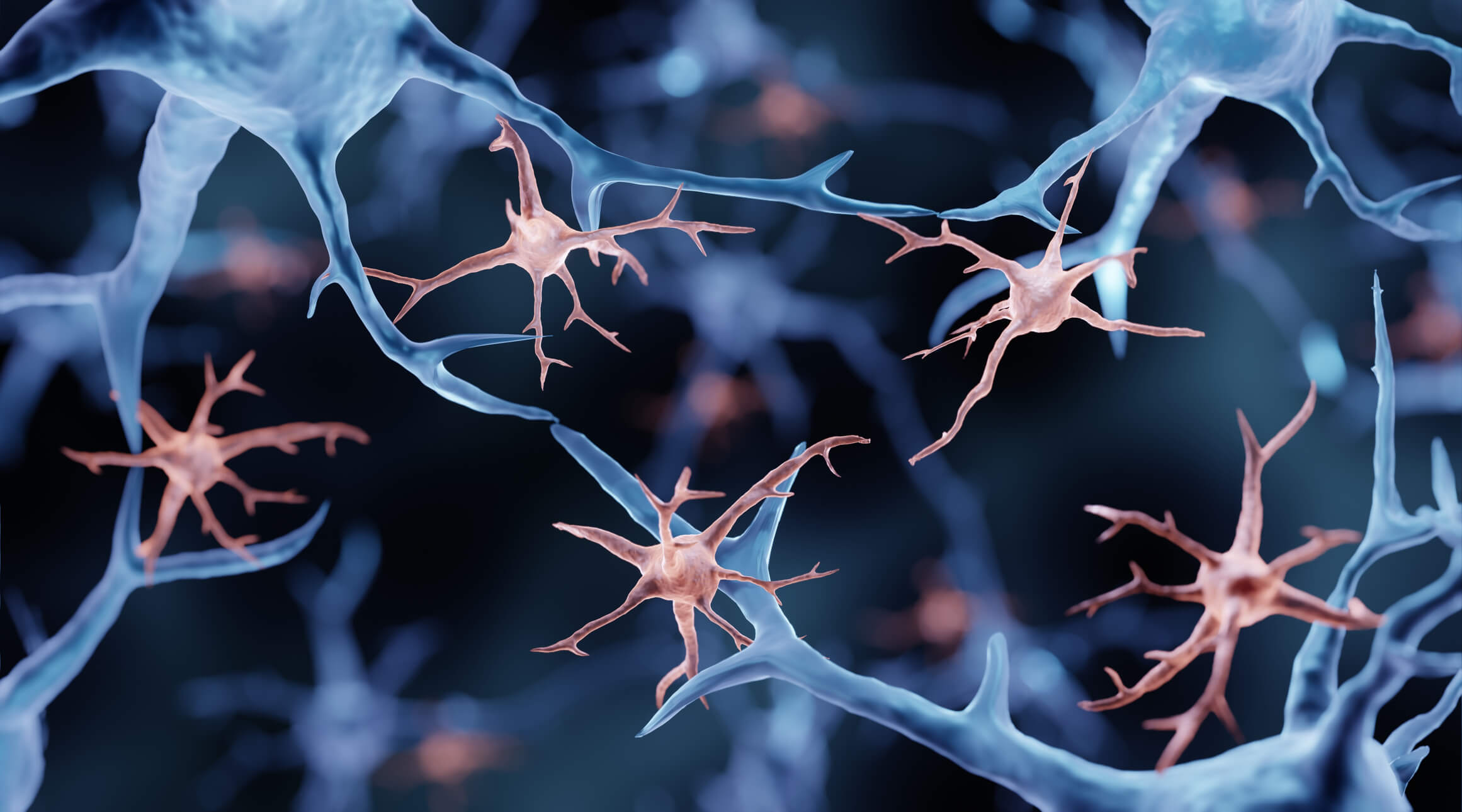
Microglia are the brain's resident immune cells, and beyond fighting pathogens they physically carry out synaptic pruning. In children with genetic vulnerability, a trigger like a routine infection or fever may push microglia into a chronically overactive state—where instead of supporting healthy growth they begin clearing functional connections. A 2024 study in Molecular Psychiatry found that in autism-associated models, microglia over-prune synapses during specific developmental stages, and blocking that activity partially restored normal synaptic density.3
Mitochondrial dysfunction and bioenergetic failure
Mitochondria produce the ATP that fuels cellular activity, and the brain consumes nearly 20% of the body's energy—making it exquisitely vulnerable to energy shortfalls. A subset of children who regress have underlying mitochondrial dysfunction: their cells cope under normal conditions, but during rapid brain growth or a stressor (high fever, GI illness) the mitochondria can't meet soaring demand, and sensitive neural networks falter. We cover this in depth in our guide to the mitochondrial cocktail.
Excitatory / inhibitory (E/I) imbalance
A healthy brain balances excitatory signals (glutamate) against inhibitory ones (GABA). If the inhibitory GABAergic system fails to mature around 18 months, the brain tips toward hyper-excitability—struggling to filter out sensory noise. Overwhelmed, a toddler may cope by turning inward, losing the capacity to process language and complex social cues at the same time.
3 Regressive vs. Early-Onset Autism
It helps to see how regressive autism differs from early-onset autism side by side:
| Characteristic | Early-onset autism | Regressive autism |
|---|---|---|
| Typical onset | Present from early infancy (0–12 mos) | Skill loss at 15–30 mos (peak 18–20) |
| Early milestones | Subtle early delays | Reaches typical milestones first, then loses them |
| Main pattern | Delayed acquisition of new skills | Loss of established language & social skills |
| EEG findings | Varied | Higher rate of subclinical epileptiform activity |
Early Indicators: Was It Always There?
One of the most compelling questions in the field is whether "regressive" autism is truly a sudden loss—or whether subtle differences were present all along. Using frame-by-frame home-movie analysis and eye-tracking, researchers have found that many children who "suddenly" regress at 18 months showed subtle micro-markers months earlier: slightly shorter gaze at eyes, minor delays in postural control, or unusual sensory fascinations in early infancy.2 For these children, the underlying differences were present from early on; the "regression" is the point where the brain's compensatory strategies could no longer keep pace with toddlerhood's escalating demands.
Hope, Recovery, and Early Intervention

Watching a child lose skills is one of the hardest experiences a family can face—but a diagnosis of regressive autism is not a fixed trajectory. The very neuroplasticity that makes this window vulnerable also makes it uniquely responsive to early intervention. Because young brains are so adaptable, targeted therapies started early can help rebuild pathways and support re-acquisition of skills. Developmental therapies form the essential foundation:
- Speech and language therapy: total-communication approaches that combine verbal prompts, visual aids, and AAC to rebuild expressive and receptive communication.
- Occupational therapy: addressing sensory-integration differences so the nervous system stays regulated.
- Developmental play therapies: naturalistic, child-led models (such as the Early Start Denver Model) that build engagement through shared joy.
Start these as early as possible—you don't need to wait for a formal diagnosis to begin—because early identification and support provide the strongest foundation for long-term progress.
4 Looking Deeper: Root-Cause Support for the Biology Underneath
Developmental therapies do essential work rebuilding skills—but they don't address the underlying biological stressors that may have contributed to the regression in the first place. This is where a functional or biomedical (MAPS-style) approach becomes a complementary layer: not a replacement for early intervention, but a way to investigate and support the systems the science above points to. Because the mechanisms differ from child to child, this work should always be individualized and guided by testing rather than applied blindly.
The two most direct extensions of the biology in this article:
- Mitochondrial and bioenergetic support. For children whose testing suggests mitochondrial dysfunction, targeted nutrient support—the so-called "mitochondrial cocktail" of carnitine, ubiquinol (CoQ10), and alpha-lipoic acid, among others—aims to shore up the cellular energy that high-demand neural networks depend on. We break this down fully in The Mitochondrial Cocktail.
- Calming neuroinflammation. Where chronic microglial activation and inflammation appear to be driving the picture, a root-cause approach looks upstream—identifying and reducing the drivers of that inflammation, such as gut dysbiosis, chronic infections, oxidative stress, and toxic burden, while supporting the body's own antioxidant systems (like glutathione). Our guide to gut dysbiosis and the gut-brain axis covers one of the most common of these drivers.
Other domains a comprehensive workup may explore include methylation and folate status, nutrient deficiencies, and immune dysregulation. None of these is a cure, and the evidence base for each varies—but for the right child, addressing measurable, treatable contributors can remove some of the biological load on a brain that's trying to recover.
Frequently Asked Questions
At what age does autistic regression usually happen?
Most commonly between 15 and 24 months, with a clinical peak around 18–20 months. It affects an estimated 20–30% of children later diagnosed with autism.
Can a child recover skills lost during regression?
Many children re-acquire skills with early, targeted intervention. The same brain plasticity that makes this window vulnerable also makes it responsive to speech therapy, occupational therapy, and developmental play-based approaches. Outcomes vary by child.
What causes autistic regression?
Current research points to a multifactorial process: a genetic predisposition combined with neurobiological vulnerability (brain overgrowth, altered connectivity) and secondary triggers such as neuroinflammation, mitochondrial stress, or excitatory/inhibitory imbalance—often surfacing during the rapid brain changes of the second year.
Are there biomedical treatments for regression?
There's no proven cure, but a functional or MAPS-style approach can investigate and support treatable contributors the research points to—such as mitochondrial dysfunction or neuroinflammation—alongside (never instead of) early developmental therapies. Any such plan should be individualized and guided by testing.
Is regression caused by something the parents did?
No. Regression is a biological transition rooted in brain development and genetics—not a result of parenting, and not a single isolated event.
Seeing skills slip? Investigate every layer.
Early developmental therapy is the essential first step—and Neuro Root can help you look deeper at the biology underneath. Our telehealth consultations and functional lab testing help families investigate root-cause contributors like mitochondrial dysfunction and neuroinflammation, then build a safe, individualized plan that works alongside your child's developmental team.
Explore root-cause testingReferences
- Reviews of autistic regression report skill loss in roughly 20–30% of cases, typically 15–24 months. See overview: Rethinking regression in autism.
- Retrospective home-video and eye-tracking studies indicate regression is often gradual and preceded by subtle early markers. Summarized in the review above.
- Microglial over-pruning of synapses during development in autism-associated SCN2A-deficient mice and human cerebral organoids. Mol Psychiatry. 2024. PubMed
- Early brain overgrowth followed by accelerated synaptic pruning underlies the "over-pruning" hypothesis of autism onset (Karmiloff-Smith, 2015; Courchesne early-overgrowth work). See discussion: The Transmitter.
Disclosure: Neuro Root may earn revenue from services, tests, or products ordered through our platform. This article is educational and is not a substitute for professional medical advice. Biomedical interventions should be undertaken only under qualified clinical supervision.